Why sell your home through us?
Selling a property during a divorce should not add stress. We make it fast, certain and human.
A fair offer, fast
You get an honest, no-obligation offer on your home, often within a few days.
No agent, no viewings
No agency fees, no open days and no uncertainty about when your house will sell.
You choose the timing
Sell quickly or take a little more time? You decide when the sale is done.
Discreet and human
A divorce is sensitive. Everything is handled discreetly and with respect for your situation.
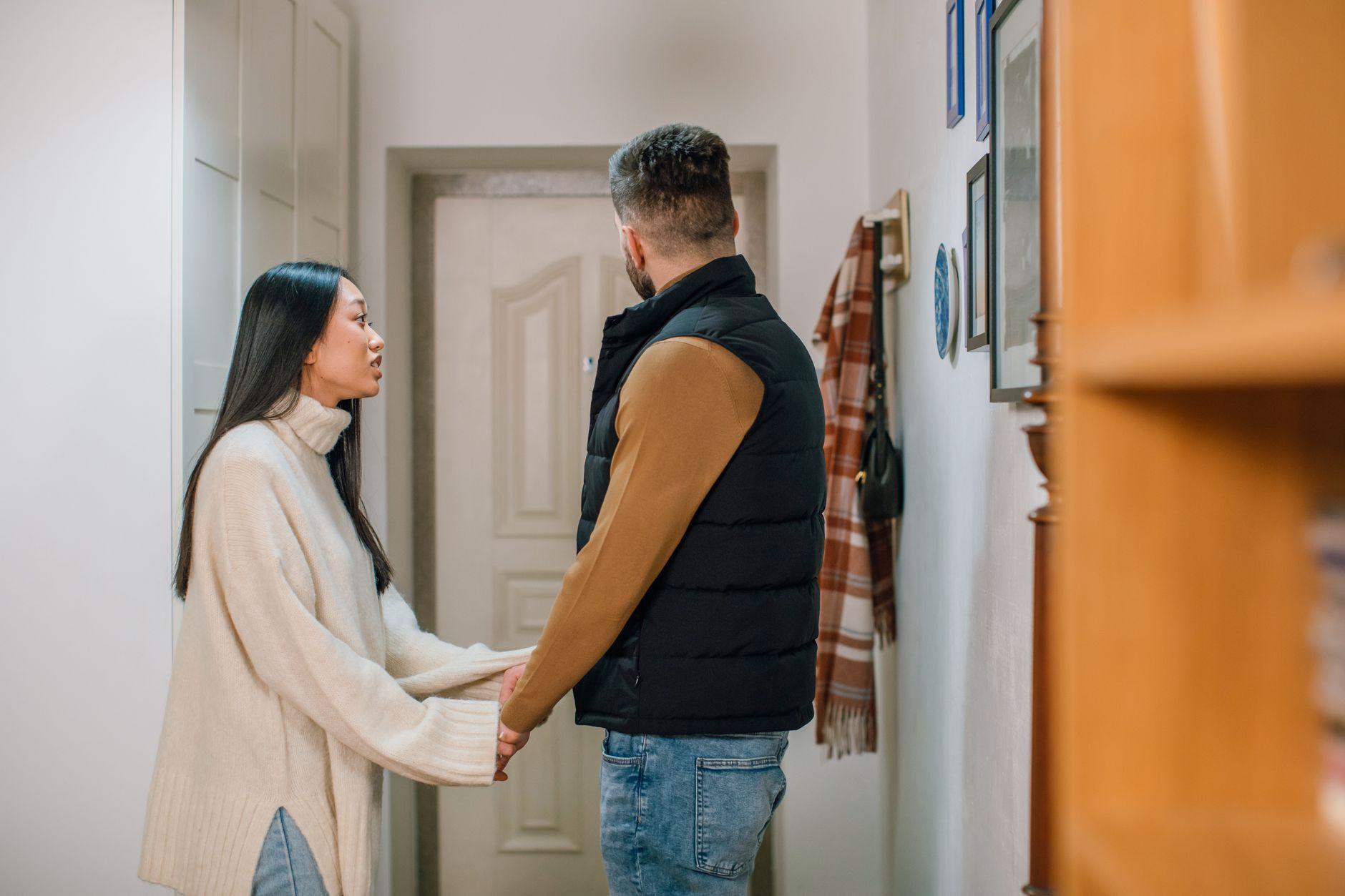
A divorce raises many questions. One of the biggest: what do we do with the jointly owned home? Sell it, divide it, or buy the other person out? If you want to keep the house, you have to buy out your partner. That means you take over your partner's share and continue living there on your own. This guide explains exactly how that works, what it costs, and what to watch out for.
Buying out means you take over your partner's ownership share. Suppose you both own 50% of the house, then you buy that 50%. After that, you are the sole owner. The house itself remains, but the ownership structure changes.
This can happen in two ways: through a private agreement or through a notarial deed. With a private agreement, you agree on a price yourselves and record it in a document. But for the transfer of ownership, a notarial deed is always required. That deed is registered with the mortgage office, making the transfer official.
Important: buying out is not the same as selling the house to a third party. With a buyout, the house stays within the family or household. This has consequences for registration duties and sometimes for tax treatment.
The buyout amount is the sum you pay your partner for their share. Usually that is half of the current market value of the house, but not always. If you are not each 50% owners, the share is calculated proportionally.
It is best to have the market value determined by a certified appraiser or a real estate agent. They take into account the condition of the house, the location, recent sale prices in the area and any renovations. Sometimes a notary can also arrange for a valuation.
Besides the value of the house, you also need to consider the outstanding mortgage loan. If there is still a loan running, you have to refinance or take it over. The part of the loan that corresponds to your partner's share is usually deducted from the buyout amount. A clear overview of all costs can be found in our guide on calculating a house buyout.
Don't forget the costs either: notary fees, possible registration duties, and the costs of a new mortgage loan if you need one to finance the buyout.
A buyout goes through several steps. First, you have to agree on the terms: the price, the division of the loan, and who pays which costs. Then you have the house appraised. Based on that, you calculate the buyout amount.
Next, you go to the notary. The notary draws up the deed of division and transfer. The notary also checks for any obstacles, such as a mortgage or a seizure. If everything is in order, you sign the deed and the ownership is transferred.
After that, you need to adjust the mortgage loan. If you want to take over the loan, the bank has to agree. Often a refinancing is necessary, because the bank has to assess the loan based on your name and income. Sometimes it is even necessary to take out a new loan.
Finally, you pay the buyout amount to your partner. That can be in one go, or in instalments if you agree on that. Note: the payment must be traceable, for example via a bank transfer with a clear description.
The costs of a buyout consist of several parts. First, there is the buyout amount itself: the sum you pay your partner. In addition, there are notary fees, which depend on the value of the house and the complexity of the deed.
In Flanders, you sometimes pay a reduced registration duty for a buyout between partners, but that depends on your situation. In Brussels and Wallonia, different rules apply. Because the rules differ per region, it is wise to get advice from a notary or a family law lawyer.
Furthermore, there are costs for the appraisal of the house, possible costs for refinancing the loan, and sometimes a reinvestment fee if you repay a running loan early. That fee can be substantial, so check with your bank.
A handy way to get a first idea of the amount is our guide on calculating a house buyout. In it, we explain step by step how to calculate the sum.
Whether it is better to buy out or sell depends on your personal situation. Buying out is interesting if you want to stay in the house, for example because the children go to school there or because you don't want to leave the neighbourhood. It also gives emotional peace: you don't have to move.
But buying out also means you bear the full costs of the house: the mortgage, maintenance, insurance. So you need enough income to carry the loan on your own. Moreover, you have to be able to finance the buyout amount.
Selling is often a clearer financial settlement. You sell the house to a third party, pay off the loan and divide the proceeds. In our guide on buying out your partner or selling, we compare the pros and cons of buying out and selling.
In doubt? Talk it over with your partner and get advice from a notary or lawyer. They can help you see the financial and legal consequences of each option.
A common mistake is buying out without a proper appraisal of the house. If you estimate the value too low, you pay your partner too little and that can cause problems later. So always have an appraisal done by a certified appraiser.
Another mistake is not arranging the mortgage loan. Some people forget that the loan is in both names and that the bank has to agree to the takeover. If you don't arrange that, your partner remains a co-debtor, which can cause tension.
Also not recording the agreements in a notarial deed is risky. A private agreement is not enough to transfer ownership. Without a deed, your partner remains a co-owner, with all the consequences that entails.
Finally: don't underestimate the emotional impact. A buyout is not only a financial transaction, but also an emotional step. Take the time to arrange everything properly and get professional help where needed.
Check out our other guides or ask for no-obligation advice.
 Buying out a house in a divorce: how it works and what are your options?
 Buying out your partner during divorce or selling: how to make the right choice
 Buying out your partner: what you need to know in a divorce
 Common mistakes when buying out your partner or selling
 Calculating a partner buyout for your house: a clear guide