Why sell your home through us?
Selling a property during a divorce should not add stress. We make it fast, certain and human.
A fair offer, fast
You get an honest, no-obligation offer on your home, often within a few days.
No agent, no viewings
No agency fees, no open days and no uncertainty about when your house will sell.
You choose the timing
Sell quickly or take a little more time? You decide when the sale is done.
Discreet and human
A divorce is sensitive. Everything is handled discreetly and with respect for your situation.
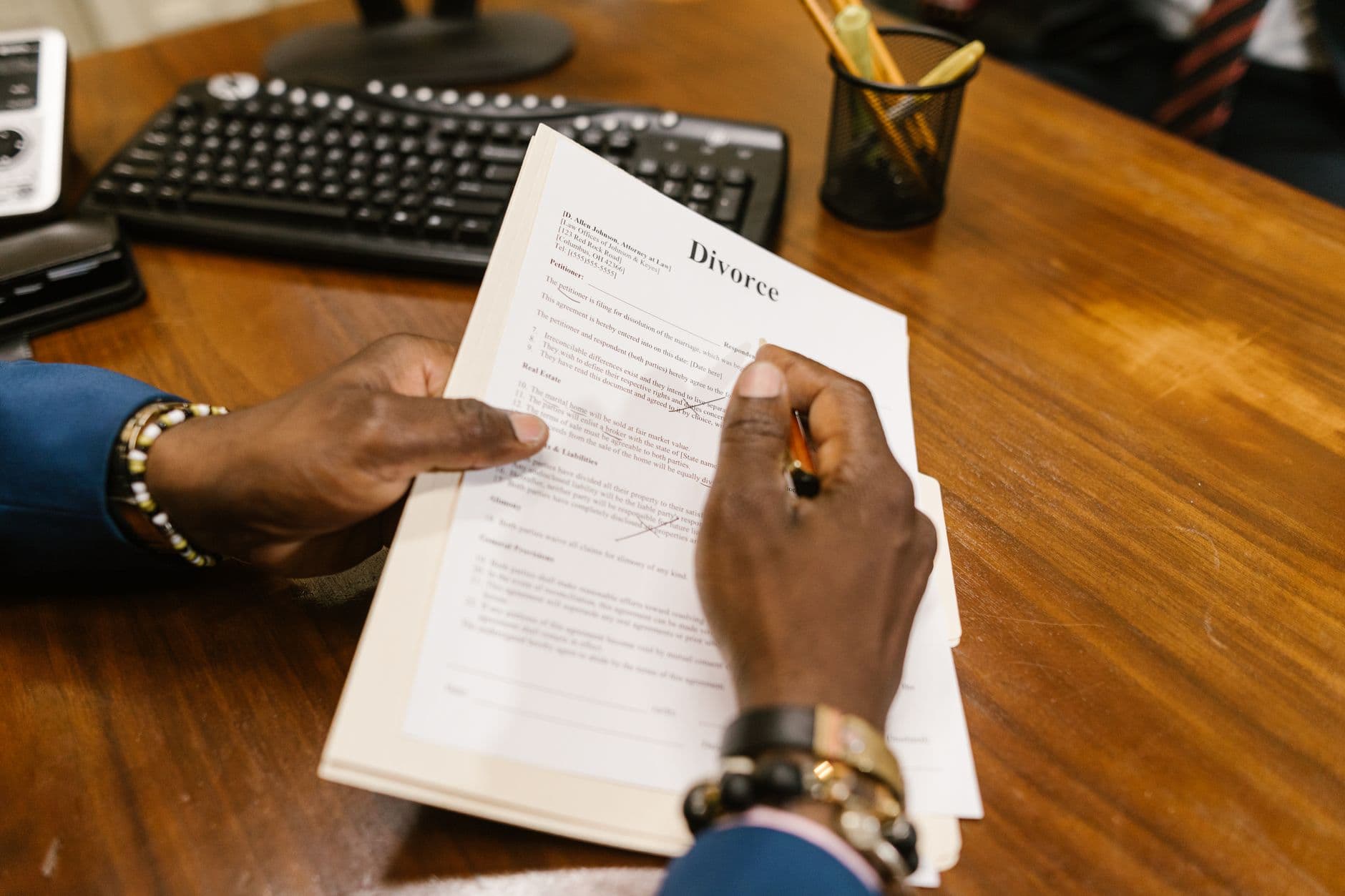
When a marriage ends, one of the first questions that comes up is: can one partner take over the house, and how exactly does that work? Taking over the jointly owned home is a common choice, especially when children are involved or when one of you wants to stay in the area. It is a major decision with financial, tax and emotional consequences. In this guide we explain step by step what is involved in taking over a house after divorce, which pitfalls to avoid and where to get professional help. We do not provide personal legal or tax advice; for that you should consult a notary or family law attorney.
Taking over the house after divorce means that one partner acquires full ownership of the jointly owned home. The other partner is bought out and removed from the title deed. This can happen in two ways: through an amicable settlement between the two of you, or through a court procedure if you cannot agree. In Flanders, Brussels and Wallonia the same principles apply, but the practical details can differ depending on your matrimonial property regime and any agreements you made earlier.
Who gets to take over the house depends on several factors. Sometimes one partner has a clear preference, for example because that partner is the primary caregiver for the children or because the home is closer to work. If you disagree, a judge can make the decision. The judge will consider the interests of the family, the financial capacity of both partners and other specific circumstances. For more background on who gets the house, read our guide on who gets the house in a divorce.
Before you can determine a buyout price, you need to know what the home is worth. A valuation by a certified appraiser or a notary is the most objective basis. It takes into account the location, the condition of the building, the plot size and recent sale prices in the area. A real estate agent can also provide a valuation, but be careful: they sometimes have an interest in suggesting a high price to win a sales listing.
In a divorce, it is wise to have the valuation done at a time when both partners agree on the choice of appraiser. That way you avoid disputes about the value later. Some couples get two valuations and take the average. What your home is worth in a divorce also depends on market conditions and the condition of the property. Read more about valuation in our guide on what your home is worth.
The buyout amount is the sum the acquiring partner pays to the other partner. That amount is not simply half of the appraised value. First you subtract the outstanding mortgage debt from the appraised value. The remaining amount, the equity, is divided according to your ownership share. Usually that is half each, but it can be different if you contributed unequally when buying the property.
An example: the home is appraised at 300,000 euros and there is still a mortgage of 100,000 euros on it. The equity is then 200,000 euros. If you each own half, the buyout amount is 100,000 euros. The acquiring partner must pay that amount to the other, on top of taking over the existing mortgage debt. The notary calculates this exactly based on the deed and the current figures from the bank.
Taking over the house means you will pay off the existing mortgage on your own and you must come up with the buyout amount. That can be a heavy financial burden. Your bank will assess your application for a new loan or an adjustment of the existing loan based on your current income, your other debts and your savings. Sometimes it is necessary to refinance the loan or take out an additional loan.
Be honest with yourself: can you afford the monthly payment on your own, even if your income temporarily stops? Take into account additional costs such as notary fees for the transfer, registration or division duties, and possible costs for a new loan restructuring. A notary or an independent financial advisor can help you assess this realistically. If taking over the house turns out to be financially too risky, selling may be a better option. Read more about the alternatives in our complete guide on selling a house during divorce.
The actual transfer takes place at the notary. The notary draws up a deed of division, stating who takes over the home, at what price and how the buyout amount will be paid. The transfer of the mortgage and the possible removal of the other partner from the loan deed are also arranged. In Flanders and Brussels, when leaving joint ownership after divorce you usually pay a division duty instead of registration duties, but the exact rates and conditions differ by region and situation. Ask your notary about this.
The notary also checks whether there are any other creditors, such as a supplier with an outstanding invoice or a family member who gave a loan. Only when everything is known can the deed be executed. From that moment on, you are the full owner and your ex-partner is released from all obligations regarding the home.
A classic mistake is taking over the house at a price that is far too high or too low, because the valuation was not objective or because emotions played a role. Another pitfall is underestimating the additional costs: on top of the buyout amount and the mortgage, there are notary fees, possible refinancing costs and sometimes costs for necessary renovations. Some people also forget to arrange the household contents and other movable property; those do not automatically fall under the property transfer.
Not updating the fire insurance and housing payments in time can also cause problems. Once the deed is executed, the policy must be in your name and you must correctly process the housing bonus or other tax benefits in your tax return. A notary or accountant can help you with that. Finally, it is wise to put agreements about the home in writing, even if you currently get along well. That way you avoid misunderstandings later.
The question of who may stay in the home depends on two things: who is the owner and what you agree together. If the home is in both names, in principle you both have an equal right to keep living there until a decision is made about the division. That can be difficult when the relationship has just ended.
Pending a final agreement, the court can, at the request of one partner, determine who temporarily stays in the home and who lives elsewhere. That decision is called an interim measure. The court considers, among other things, the living situation of children, financial capacity and whether there is domestic violence.
After the divorce, what you record in a divorce settlement or a notarial deed applies. If one partner takes over the home, the other leaves and is bought out. If you sell the home together, you both leave the house as soon as the sale is completed.
If the home is in only one name, that owner in principle has the strongest right to stay. The other partner can claim compensation for contributions to the mortgage or the increase in value, but there is no automatic right of residence.
If you want to take over the home, the mortgage usually has to be put entirely in your name. The bank assesses whether you can bear the monthly payments alone. Your income, fixed expenses and any alimony play a role in this.
If the mortgage was in both names, you both remain responsible for the debt as long as the bank does not grant a release. This is called release from joint and several liability. Only after approval by the bank and amendment of the deed is the departing partner definitively freed from that obligation.
The bank requires a recent payslip, an overview of debts and often a valuation report of the property. The bank also looks at the value of the home compared to the outstanding mortgage. If the home is worth more than the remaining debt, you must pay part of the surplus value to your ex-partner. That amount can sometimes be financed in the new mortgage, if your income allows it.
Ask your bank or mortgage adviser exactly which documents are needed. Each bank applies its own rules, and a preparatory conversation prevents surprises.
Taking over the home is not the best route for everyone. Sometimes the mortgage payment alone is too high, or the memory of the house remains too heavy. Then selling together is a healthier choice.
Taking over can be sensible if you can bear the monthly payments alone, the children can stay at the same school and you want to keep the home. It also matters that a sale involves costs, such as possible estate agent fees and preparing the home for viewings.
Selling is often faster and more definitive. You divide the proceeds, pay off the mortgage and both partners can start anew. Anyone who wants clarity quickly and does not want long negotiations about the buyout amount will find a discreet and fast route in a sale to a professional property buyer. You do not need to hire an estate agent and you determine the timing of the transfer yourself.
Discuss both paths with a financial adviser or a notary. They calculate what remains at the bottom line when taking over and when selling, so that you choose based on figures and not only on feeling.
Practical questions
Check out our other guides or ask for no-obligation advice.